Safety Leads Every Job
It shapes how we plan, how we train, and how our crews show up each day.
- OSHA-aligned training
- In-person instruction
- Every crew, every site
Building a Safety Culture
At EBG, safety is not a department or a poster on the breakroom wall. It is a habit we build into every job, every day, by every person on site. We expect it of ourselves and of every partner who works alongside us.
Our culture is simple. When something does not look right, we stop. We figure it out. Then we keep building. That is how we protect our people, our clients’ operations, and the communities we work in.
Stop Work Authority
Any worker on any EBG site (EBG employee or subcontractor) can stop work if something is unsafe. No questions, no penalty, no pressure to push through. Work resumes when it is right.
Trained On Topics That Matter Most
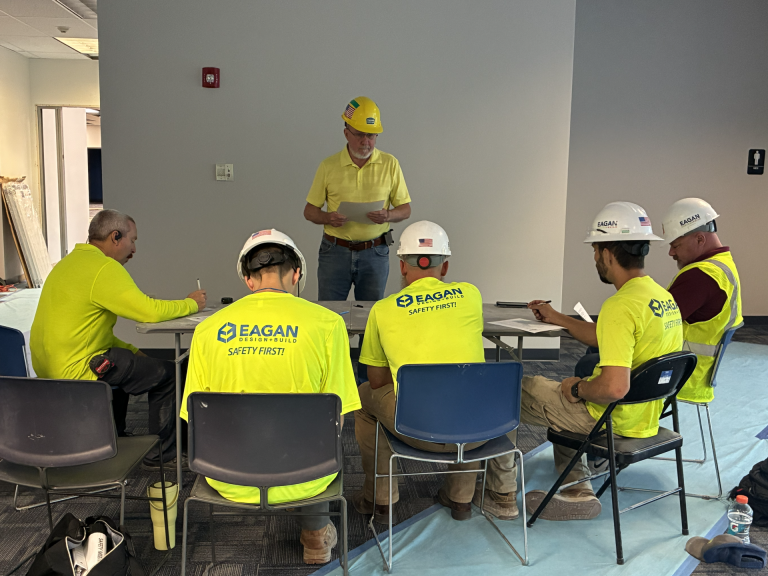
Our field team trains in person with an outside safety consultant on the topics that show up most often on a commercial and industrial jobsite. Training is recurring, not one-and-done. New hires get caught up as they join the team. Training is delivered in person by an outside safety consultant and refreshed on a recurring basis.
Building a Safety Culture
How we think about safety, not just what we do
Power Tool Safety
Operating, maintaining, and respecting the tools of the trade
Silica Safety
Cutting, grinding, and dust control done right
Safety Data Sheets
Knowing what we work with and how to handle it
Near Miss Reporting
Learning from the close calls before they become incidents
Lock Out / Tag Out
Controlling energy sources before service or maintenance
Excavating/Trenching
Safe practices below grade
PPE
The right gear for the right task, every time
Ladder Safety
The most common tool, treated with the most common sense
Hearing Conservation
Protecting one of the harder things to repair
Fall Protection
Working safely at height on every type of build
Bloodborne Pathogens
Protecting our people and meeting OSHA standards
Basic First Aid
Trained responders on every site
What Safety Looks Like Every Day
Site-Specific Plans
Every EBG project starts with a safety plan built for that specific site, scope, and crew. Generic plans miss the details that matter.
Active Client Facilities
We regularly work inside facilities that cannot stop operating. We coordinate with your EHS team and follow your rules on top of ours.
Daily Toolbox Talks
Each day begins with a short, focused conversation about the work ahead, the hazards in play, and how we plan to handle them.
Heavy Equipment & Lifts
Cranes, aerial lifts, and heavy equipment get the planning and the trained operators they require. No shortcuts, no exceptions.
Pre-Task JHAs
Before crews start a task, we walk through it together. What are the steps, the risks, and the controls. Five minutes up front prevents the problems that take days to recover from.
What We Expect From Every Partner On Site
Every subcontractor on an EBG project meets the same standard we hold ourselves to. We work with partners who take safety seriously, document it, and back it up in the field.
Expectations:
- Current insurance and safety record we can review
- A written safety program for your trade
- Trained workers with the right certifications for the scope
- Site orientation before any work begins
- The same stop work authority every EBG employee has
We Want To Hear About The Close Calls
The best safety programs are not the ones with the fewest incidents on paper. They are the ones where workers feel safe enough to report what almost happened. Near misses tell us where to look next. When something gets report at EBG, it gets reviewed. If we learn something, it goes back into our training, our JHAs, and how we run the next job.
Start with a Planning Conversation
If you are planning a new construction build, start with a conversation about structured preconstruction planning to align scope, budget, and timeline before construction begins.